
By the pediatric dental team at Nihaan’s Dental Clinic, Hyderabad | Medically reviewed by Dr. Rajesh G., BDS, MDS, Implant Specialist (ICOI – USA), 13+ years of experience | Last updated: 21 August 2026
Quick answer: Childhood cavities are almost always preventable. The core plan: brush twice daily with the right amount of fluoride toothpaste for their age, floss once any two teeth touch, limit sugary snacking to mealtimes, book a first dental visit by age 1, and keep six-month check-ups after that. Baby teeth that decay still need treatment — they’re not “practice teeth” you can ignore.
Baby teeth aren’t placeholders. They hold space for adult teeth, support speech development, and let your child chew properly while their jaw grows. When a cavity forms in a baby tooth, it isn’t something to wait out until the tooth falls out on its own — untreated decay can reach the nerve, cause pain, and even affect the permanent tooth developing underneath it.
The good news: most childhood cavities are preventable, and the habits that prevent them are simple once you know what actually works at each age.
Why children’s teeth get cavities faster than adults’
Kids’ tooth enamel is thinner and less mineralised than adult enamel, so acid from sugar and bacteria breaks through faster. Add a diet that’s often higher in juice, packaged snacks, and sticky treats, plus a child who isn’t yet capable of a thorough brushing technique on their own, and decay has an easy path.
Cavities are extremely common in Indian children — national survey data puts caries prevalence at roughly 52% by age 5 and 54% by age 12, so if your child has had one, they’re far from alone. This isn’t about bad parenting. It’s biology plus habits, and both are fixable.
Real results: what early treatment actually looks like
Generic advice is easy to find. What’s harder to find is what a real cavity — and a real fix — looks like in a young child’s mouth. Here are two cases we’ve treated at Nihaan’s Dental Clinic
Case 1 — front tooth decay in a pre schooler.
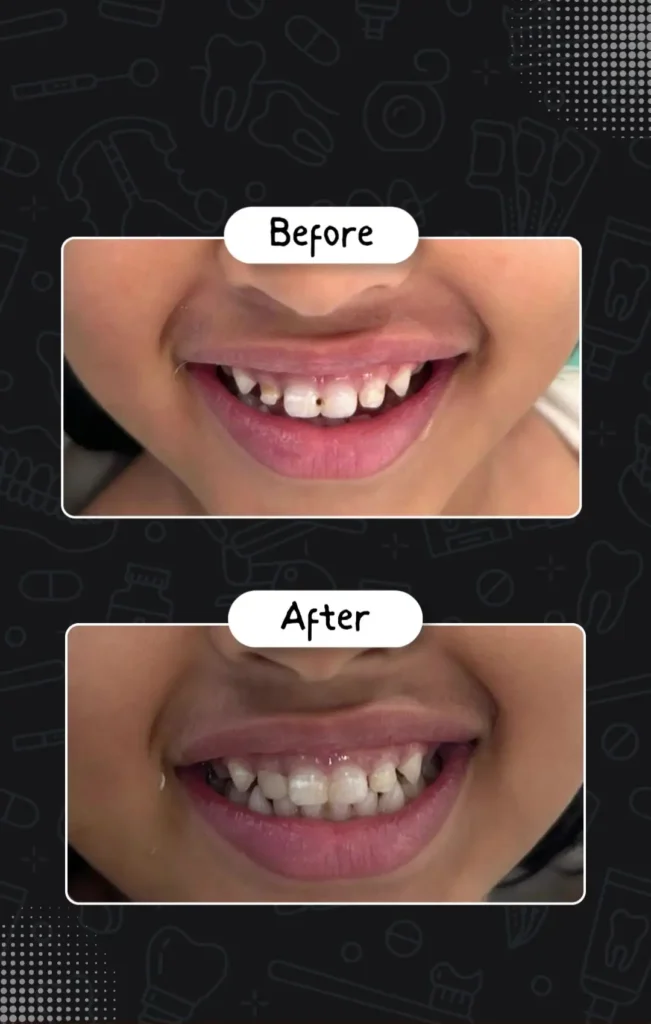
A young patient came in with a visible dark spot of decay on a front baby tooth. It didn’t stop her from smiling for the camera, but left untreated, that spot would have spread. After a restorative visit, the tooth was fully repaired and matched the surrounding teeth — same smile, cavity gone.
Case 2 — multiple cavities across the front teeth.
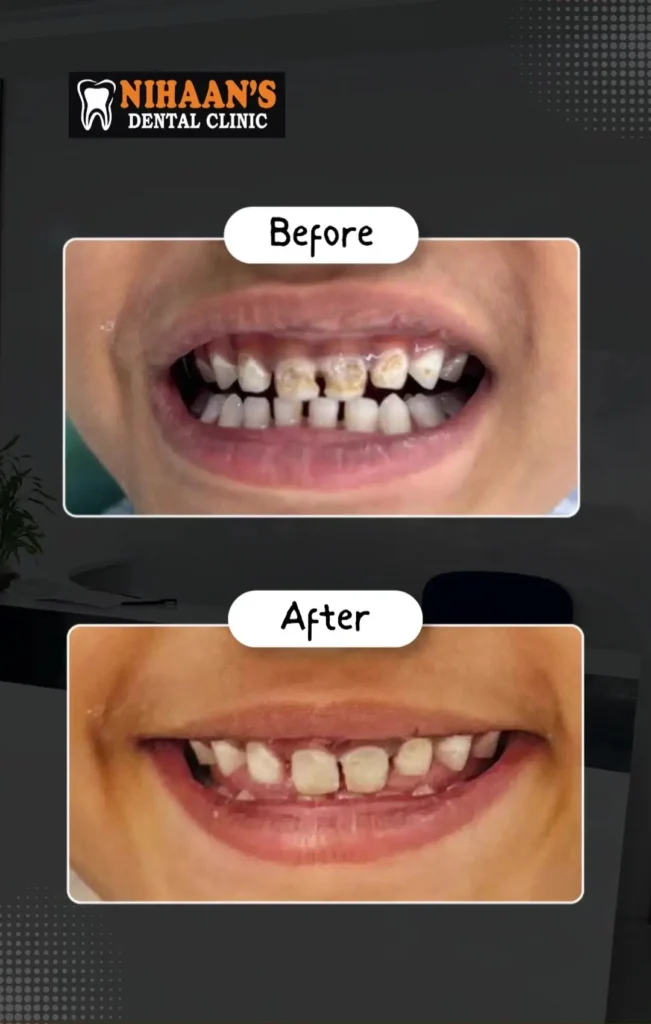
A child came in with decay across several upper front teeth, some of it visibly deep. Rather than a “wait and see” approach, we treated all the affected teeth in a planned series of visits. The after photos show intact, natural-looking teeth with no visible decay.
Cavity prevention by age
Babies and toddlers (0-2 years)
Cavities can start as soon as the first tooth appears, usually around 6 months. The biggest risk at this age is “bottle rot” — decay caused by milk, formula, or juice pooling around the teeth, especially from bedtime bottles or sippy cups used throughout the day.
- Wipe gums with a clean, damp cloth even before teeth erupt.
- Once the first tooth appears, brush twice daily with a rice-grain amount of fluoride toothpaste.
- Never put a baby to bed with a bottle of milk or juice — water only, if a bedtime bottle is non-negotiable.
- Book a first dental visit by their first birthday, or within six months of the first tooth appearing, whichever comes first.
Preschoolers (3-5 years)
This is prime cavity-forming territory. Kids this age want to brush “by themselves” but usually can’t do it well enough yet, and sugary snacks creep in through daycare, birthday parties, and grandparents.
- Let them brush first, then finish the job yourself. Full independence in brushing usually isn’t reliable until around age 7-8.
- Start flossing as soon as two teeth touch each other.
- Ask about fluoride varnish at check-ups — a quick, painless way to strengthen enamel.
- Watch snack frequency more than snack size. Grazing all day keeps teeth under constant acid attack.
School-age kids (6-12 years)
Permanent molars start coming in around age 6, and these are the teeth most prone to cavities because of their deep grooves.
- Keep an eye on sports drinks and flavoured water. Parents often swap juice for these thinking they’re healthier, but many are just as acidic and sugary.
- Encourage independent brushing, but do a spot check now and then — kids this age often rush.
The 5 daily habits that prevent most cavities
- Brush twice a day, two minutes each time, with fluoride toothpaste appropriate for their age.
- Floss once daily once any two teeth touch.
- Limit sugary and starchy snacks to mealtimes, not grazing throughout the day.
- Rinse with water after sweets or medicine, especially sticky or chewable vitamins.
- Stick to six-month check-ups, even when nothing seems wrong. Cavities are far cheaper and less painful to catch early.
Foods and drinks that are quietly causing cavities
Some of the biggest culprits aren’t the obvious ones:
| Food/drink | Why it’s a hidden risk |
| Dried fruit | Sticky, concentrated sugar that clings to teeth longer than a chocolate bar |
| Flavoured yoghurt | Often has more added sugar than parents expect |
| Fruit juice (even 100%) | Still sugar in liquid form — worse when sipped slowly over time |
| Chewable vitamins | Great for compliance, tough on teeth without a rinse or brush after |
| Crackers and chips | Starches break down into sugars and stick in molar grooves |
It’s not about cutting these out completely — it’s timing. Eating them with a meal, followed by water, does far less damage than snacking on them slowly across the afternoon.
When to bring your child in for a check-up
Book a visit sooner than the standard six-month mark if you notice:
- White or brown spots on teeth, especially near the gumline
- Complaints of tooth pain or sensitivity to hot, cold, or sweet foods
- Visible holes or pits in a tooth
- Bad breath that doesn’t improve with brushing
- Reluctance to chew on one side of the mouth
What to do if you already spot a cavity
First: don’t panic, and don’t wait for the tooth to “just fall out” if it’s a baby tooth with several years of use left in it. As the two cases above show, even multiple cavities in front teeth can be fully restored — untreated decay is the real risk, not the treatment itself.
Book a check-up as soon as you notice a concern. Depending on how deep the decay is, treatment for kids ranges from a simple filling to more involved options, and catching it early almost always means a simpler, less stressful fix for your child.
FAQs
By their first birthday, or within six months of their first tooth appearing.
Yes, in the right amount — a rice-grain smear for children under 3, and a pea-sized amount from age 3 onward, supervised so they spit rather than swallow.
For back molars, generally yes. They add a protective layer over the deep grooves where cavities most often start.
It can be fixed. As shown above, both a single-tooth cavity and a case with multiple decayed front teeth were fully restored at Nihaan’s — extraction is only needed when decay is too advanced to save the tooth.