
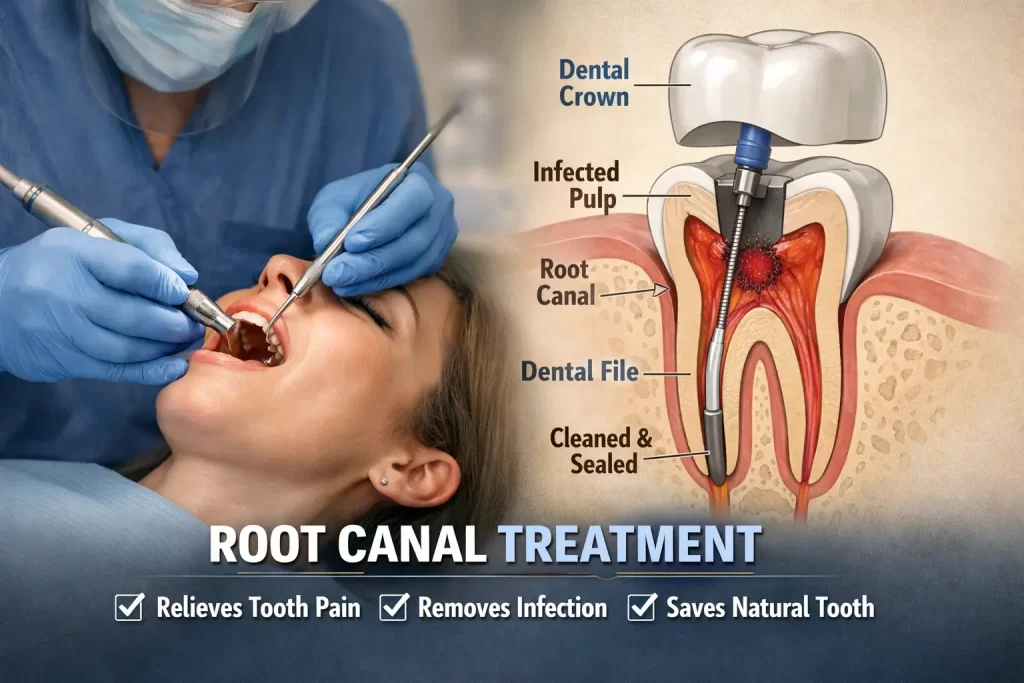
Tooth pain can start small and then quickly become something you cannot ignore. If the pain is deep, persistent, or triggered by hot and cold foods, it might mean the inner part of the tooth is infected. In many such cases, a root canal treatment is the best way to save the natural tooth and stop the pain.
If you are searching for Root Canal Treatment in Gachibowli, this guide will help you understand what the procedure involves, when it is needed, and how modern dentistry makes the process comfortable and effective.
What is Root Canal Treatment?
Root canal treatment (often called RCT) is a dental procedure used to treat infection inside the tooth. The inner layer of the tooth, known as the pulp, contains nerves and blood vessels. When bacteria reach this area due to deep decay, cracks, or trauma, it can cause severe pain and infection.
During a root canal procedure, the dentist:
- Removes the infected pulp
- Cleans and disinfects the root canals
- Fills and seals the space
- Restores the tooth with a filling or dental crown
The goal is simple: save your natural tooth and eliminate infection.
Many patients assume root canals are painful, but with modern anaesthesia and technology, the procedure is usually no more uncomfortable than getting a regular dental filling.
Signs You May Need a Root Canal
Recognizing the symptoms early can prevent more serious dental problems. Here are some common signs that may indicate you need root canal treatment:
- Persistent toothache or throbbing pain
- Sensitivity to hot or cold that lingers
- Swelling or tenderness in the gums
- Tooth discoloration or darkening
- Pain while chewing or biting
- Pimple-like swelling on the gums
If you experience these symptoms, it is important to consult a dentist as soon as possible. Early treatment can prevent the infection from spreading to surrounding teeth or bone.
Common Causes of Tooth Pulp Infection
The pulp inside the tooth can become infected for several reasons. Some of the most common causes include:
Deep Tooth Decay
Untreated cavities can allow bacteria to reach the pulp, causing infection and inflammation.
Cracked or Broken Teeth
A crack in the tooth can expose the inner tissues to bacteria.
Repeated Dental Procedures
Multiple procedures on the same tooth may weaken the tooth structure and affect the pulp.
Tooth Injury
Even without visible cracks, trauma can damage the pulp and lead to infection over time.
In such situations, root canal treatment becomes necessary to preserve the natural tooth.
Step-by-Step Root Canal Procedure
Many people feel anxious about dental treatments because they do not know what to expect. Understanding the process can help reduce that fear.
1. Dental Examination and X-ray
The dentist examines the tooth and takes X-rays to assess the extent of infection and the shape of the root canals.
2. Local Anaesthesia
The tooth and surrounding area are numbed to ensure a pain-free experience.
3. Cleaning the Infected Pulp
A small opening is made in the tooth to remove the infected pulp and bacteria.
4. Shaping and Disinfecting the Canals
The root canals are cleaned, shaped, and disinfected to remove any remaining bacteria.
5. Filling the Canals
The canals are filled with a special material that seals the space and prevents reinfection.
6. Final Restoration
In most cases, a dental crown is placed to restore strength and function to the tooth.
The entire procedure may take one or two visits depending on the condition of the tooth.
Is Root Canal Treatment Painful?
One of the biggest myths about root canals is that they are extremely painful. The procedure is designed to relieve pain, not cause it.
Thanks to modern dental techniques, digital imaging, and effective anaesthesia, most patients feel comfortable during treatment. The pain you feel before the treatment is usually caused by the infection itself. Once the infection is removed, the discomfort significantly decreases.
Mild soreness after the procedure is normal and usually resolves within a few days.
Benefits of Root Canal Treatment
Choosing root canal treatment instead of tooth extraction offers several advantages:
Saves Your Natural Tooth
Keeping your natural tooth helps maintain proper chewing function and jaw alignment.
Prevents Spread of Infection
Removing the infected pulp stops bacteria from spreading to nearby teeth and tissues.
Restores Tooth Function
With a crown or filling, the treated tooth works just like a natural tooth.
Improves Oral Health
Treating the infection early protects your gums, jawbone, and surrounding teeth.
Saving your natural tooth is almost always the best option when possible.
Aftercare Tips Following Root Canal Treatment
Proper care after the procedure helps ensure long-lasting results.
Here are a few simple tips:
- Avoid chewing on the treated tooth until the final restoration is placed
- Maintain good oral hygiene by brushing and flossing daily
- Avoid very hard or sticky foods for a few days
- Attend follow-up appointments with your dentist
With good care, a tooth treated with a root canal can last many years or even a lifetime.
Choosing the Right Dentist for Root Canal Treatment in Gachibowli
When looking for a dentist for Root Canal Treatment in Gachibowli, it is important to choose a clinic that focuses on patient comfort, modern technology, and precise diagnosis.
An experienced dental team can make the treatment faster, safer, and more comfortable. Digital X-rays, advanced instruments, and a patient-centered approach all contribute to better outcomes.
Book Your Consultation Today
If you are looking for safe, comfortable, and effective Root Canal Treatment in Gachibowli, visit Nihaan’s Dental Clinic. Our experienced dental team focuses on gentle care, modern treatment methods, and personalized attention for every patient.
Take the first step toward a pain-free smile.
Schedule your free appointment with Nihaan’s Dental Clinic.
FAQ’s
A root canal treatment usually takes 30 to 90 minutes, depending on the complexity of the tooth and the level of infection. Some cases can be completed in a single visit, while others may require two appointments to ensure the tooth is properly cleaned and sealed.
The cost of root canal treatment in Gachibowli depends on several factors, including the type of tooth (front tooth, premolar, or molar), the severity of infection, and whether a dental crown is required. A dental consultation will help determine the exact treatment plan and cost.
With proper care, a tooth that has undergone root canal treatment can last many years or even a lifetime. Maintaining good oral hygiene, brushing, and flossing regularly, and visiting your dentist for routine checkups are essential for long-term success.
Delaying treatment can allow the infection to spread deeper into the tooth and surrounding bone. This may lead to severe pain, abscess formation, swelling, and even tooth loss. Early treatment helps prevent complications and protects your overall oral health.
A dental filling is used when decay is limited to the outer layers of the tooth. However, if the infection reaches the tooth pulp, root canal treatment becomes necessary. A dentist will diagnose the condition through an examination and digital X-rays.